Sora 2 vs Veo 3 vs Kling 2.6

Originally published on: AllAIWebsite
Sora vs Veo 3 vs Kling 2.6: The Ultimate AI Video Showdown (2026)
In 2026, AI video has moved from “experimental glitch” to “studio-grade production.” With OpenAI’s Sora 2, Google’s Veo 3.1, and ByteDance’s Kling 2.6 all available to the public, the question isn’t just about who makes the prettiest video – it’s about motion physics, audio sync, and shot length.
Whether you are a YouTuber automating a faceless channel or a CMO building a global ad campaign, here is which model you should be using.
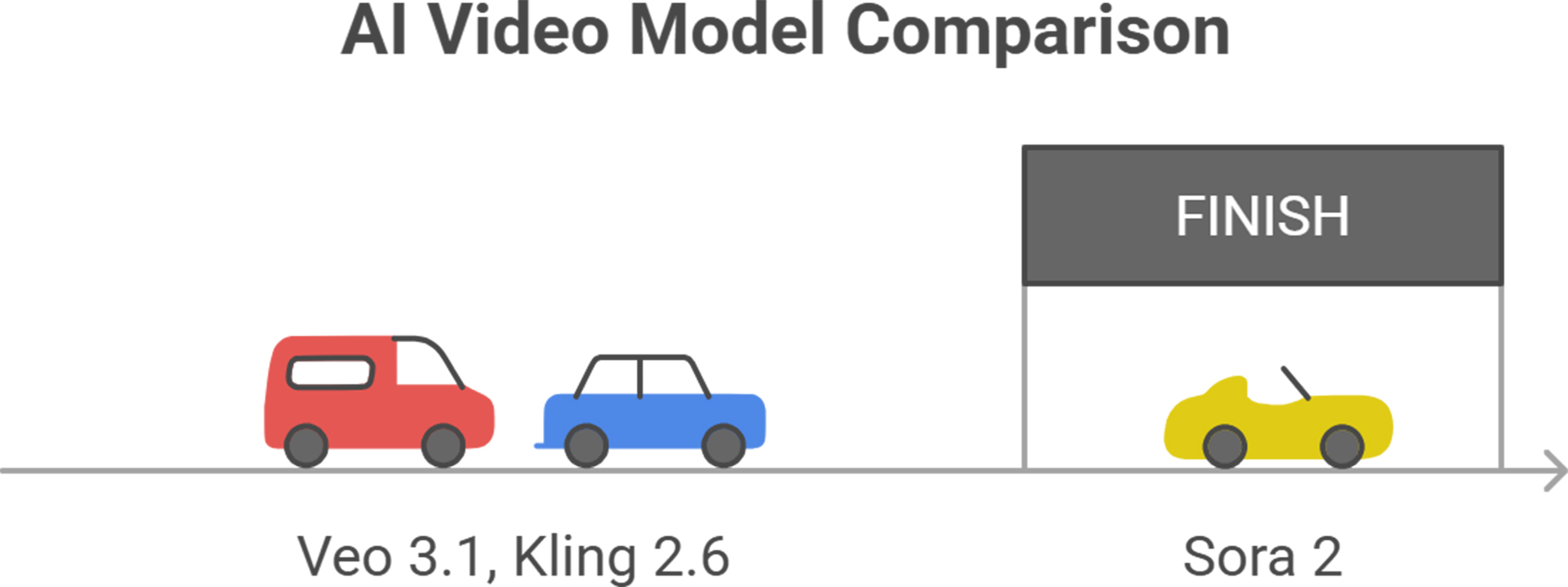
The 2026 Video Generation Scorecard
| Feature | Sora 2 (OpenAI) | Veo 3.1 (Google) | Kling 2.6 (ByteDance) |
| Max Clip Length | 60 Seconds | 60+ Seconds | 120+ Seconds |
| Primary Strength | Narrative Realism | Cinematic Lighting | Viral Motion / Lip-Sync |
| Audio Generation | Native (Sora Sound) | Native (Veo Audio) | Integrated Lip-Sync |
| Best For | High-End Commercials | Studio Filmmaking | TikTok / Social Reels |
| Availability | Paid (Subscription) | Workspace / Cloud | Free Trial Available |
1. Sora 2: The “Physics” King
OpenAI’s Sora 2 remains the gold standard for “Cinematic Truth.” In 2026, Sora’s biggest update is Physical Consistency.
- Why it wins: If you prompt a glass of water spilling, the water behaves like water. It doesn’t “morph” into the table.
- The Workflow: Use Sora when you need a 60-second narrative shot that looks like it was filmed on an Arri Alexa. It is the most “expensive” in terms of compute time, but it requires the least amount of “re-rolling.”
2. Veo 3.1: The Professional’s Camera
Google’s Veo 3.1 is built specifically for the Google Cloud and YouTube ecosystem.
- The “Director” Advantage: Veo 3.1 introduced Camera Control 2.0, allowing you to specify exact lens focal lengths (e.g., “35mm wide”) and pan speeds.
- The Audio Edge: Veo’s native integration with Google’s audio models means that the sound of footsteps or wind is generated perfectly in sync with the video frames on the first pass.
3. Kling 2.6: The Viral Factory
Coming from ByteDance (the parent of TikTok), Kling 2.6 is the “speed” champion.
- Length Matters: While Sora and Veo struggle with clips longer than a minute, Kling can generate 2-minute sequences with surprising stability.
Lip-Sync King: For faceless YouTube channels or “talking head” ads, Kling’s built-in lip-syncing is the best in the industry. It can take a static photo and a voiceover and create a believable video in seconds.
The Verdict: Which One Fits Your Project?
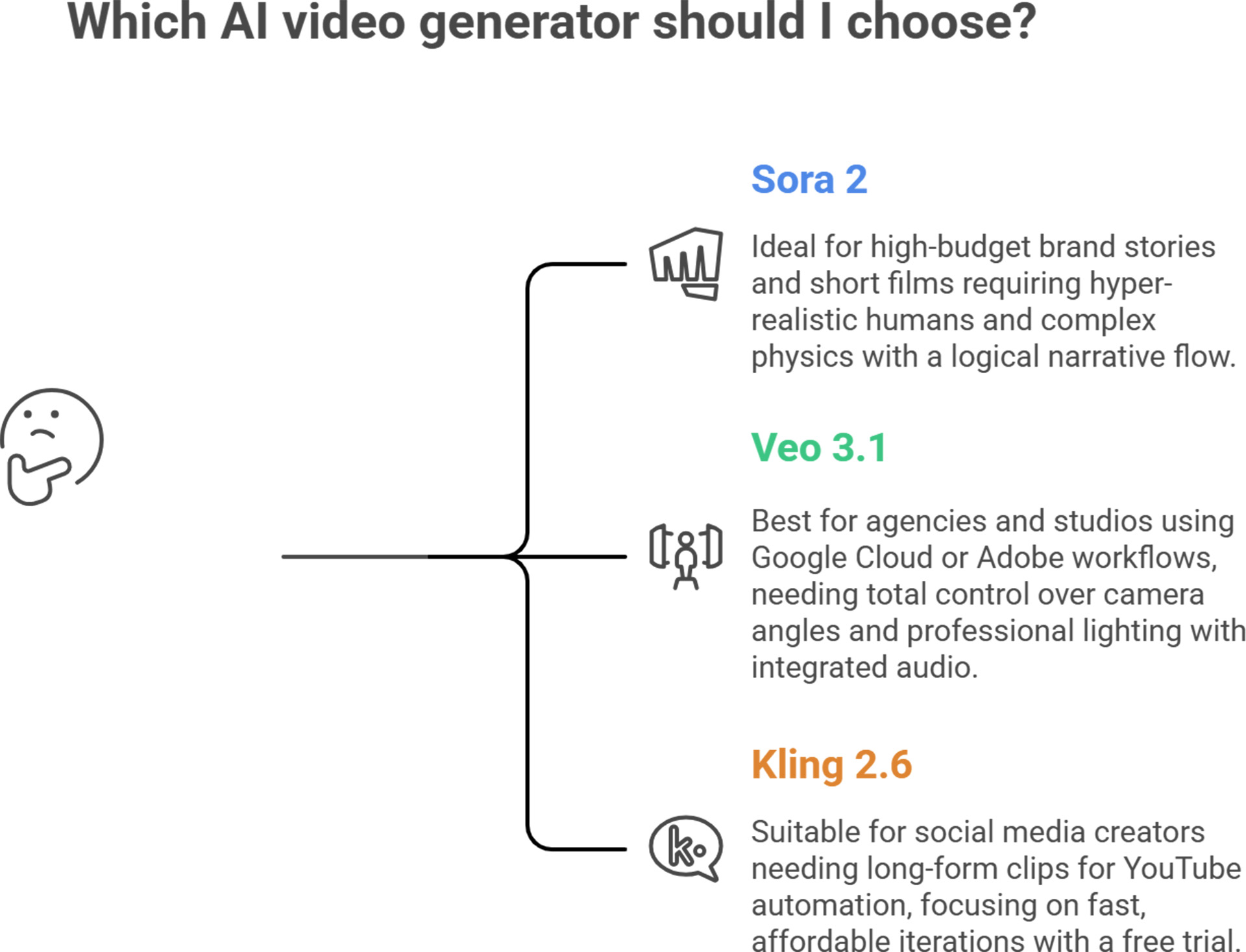
Choose Sora 2 if…
- You are producing high-budget brand stories or short films.
- You need hyper-realistic humans and complex physics.
- You want a “narrative flow” where the scene evolves logically over 60 seconds.
Choose Veo 3.1 if…
- You are an agency or studio already using Google Cloud or Adobe workflows.
- You need total control over camera angles and professional lighting.
- You want the best integrated audio generation in the market.
Or Choose Kling 2.6 if…
- You are a social media creator scaling TikTok or Instagram Reels.
- You need long-form clips (2+ minutes) for YouTube automation.
- You need fast, affordable iterations with a generous free trial.
Quick Answers: Sora vs Veo vs Kling
- Which is best for cinematic realism? Sora 2 remains the leader for high-end film physics and realistic human emotion. It is the preferred choice for premium commercials where lighting and “film grain” textures matter most.
- Can I generate 4K video? While most models default to 1080p for stability, Google Veo 3.1 and Kling 2.6 (Pro Tier) now support 4K upscaling for high-resolution production workflows.
- Does Veo 3.1 work inside Google Workspace? Yes. Veo 3.1 is integrated into Google Vids, allowing Enterprise users to generate 8-second clips with synchronized sound directly inside their presentation and video documents.
- Is there a free version of these tools? Kling 2.6 offers daily free credits for new users. Sora 2 has discontinued its free tier as of early 2026, requiring at least a ChatGPT Plus subscription for access.
- How does the ‘Extend’ feature work? In 2026, both Veo and Kling allow you to use the last frame of a generated video as the “seed” for the next clip, enabling you to build 1-minute to 3-minute continuous narrative scenes.
Check our other comparison series
Optimizing Your Video Strategy at AllAIWebsite
The “best” video generator is the one that integrates into your current workflow. At allaiwebsite.com, we provide deep-dive tutorials on prompting for Sora, API pricing for Kling, and how to use Veo 3.1 within the Google marketing suite. Don’t waste credits on trial and error – visit our AI Tools Directory to see results.


Comments
Post a Comment